Smart Working 2026: How to Give Access to Collaborators without Exposing the Network
Manual for managing secure remote access for company collaborators. Learn how to implement a VPN with MFA to protect company data.
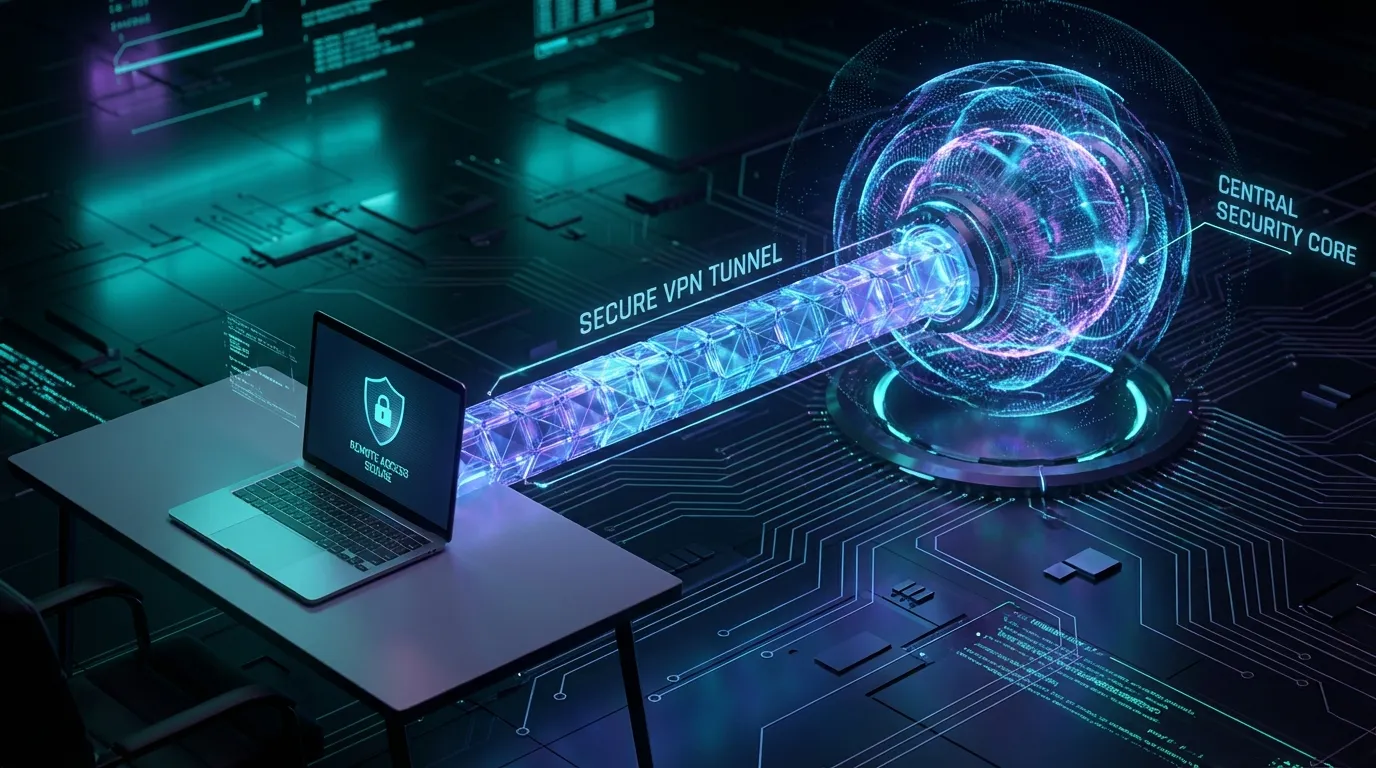
In summary: How to provide secure access to remote collaborators? In 2026, remote access via password alone is no longer sufficient. For secure and GDPR/NIS2 compliant access, it is mandatory to implement a corporate VPN with MFA (Multi-Factor Authentication). This ensures that every connection occurs via an encrypted tunnel (AES-256) and that the employee's identity is verified with a second factor (OTP via App or Hardware Token).
Smart working has become the standard for many European SMEs, but it brings a huge risk: loss of control over the corporate perimeter. Giving access to shared folders or servers via unprotected protocols is the main cause of ransomware attacks.
The Risk of Unmanaged Access
Many companies still use old technologies like direct file sharing (exposed SMB) or remote desktop (RDP) without a VPN. This allows attackers to intercept credentials on public or unprotected home Wi-Fi networks used by collaborators.
Checklist for Secure Remote Access
1. Replace Direct Access with a VPN Tunnel
Instead of exposing individual applications, create a "private road" (VPN) between the collaborator's device and the company network.
- Recommended Protocol: WireGuard (fast, modern, and secure) or OpenVPN.
- Avoid: PPTP or L2TP (old and vulnerable).
2. MFA Implementation (Multi-Factor Authentication)
A password is only the first level. The second factor can be:
- A code generated by an App (Google Authenticator, Microsoft Authenticator).
- A push notification on the mobile phone.
- A physical token (FIDO2 Key).
3. Principle of Least Privilege
An administrative collaborator should not be able to access the server where source codes or production databases reside. Access must be limited to the resources necessary for the role.
Smart Working 2026: Regulations and Compliance
In Europe, secure access is not just technical advice, but a legal requirement.
- GDPR: Art. 32 mandates the adoption of "appropriate technical and organizational measures to ensure a level of security appropriate to the risk."
- NIS2: For subject companies, multi-factor authentication is an explicit requirement for managing critical access.
How SecBox Shield Simplifies Everything
Configuring and managing dozens of VPN accesses with MFA can be complex for an unspecialized internal IT team.
SecBox Shield handles everything:
- Zero-Touch Configuration: We manage the entire VPN fleet for your collaborators.
- Integrated MFA: Every access mandatorily requires the second factor via App.
- Access Logs: Every connection is logged in an immutable way (WORM), essential for audits and security.