Managed Firewall vs Self-Managed: The SME Decision
Comparison between managed and self-managed firewalls for SMEs: costs, skills required, risks, and why more companies choose managed security.
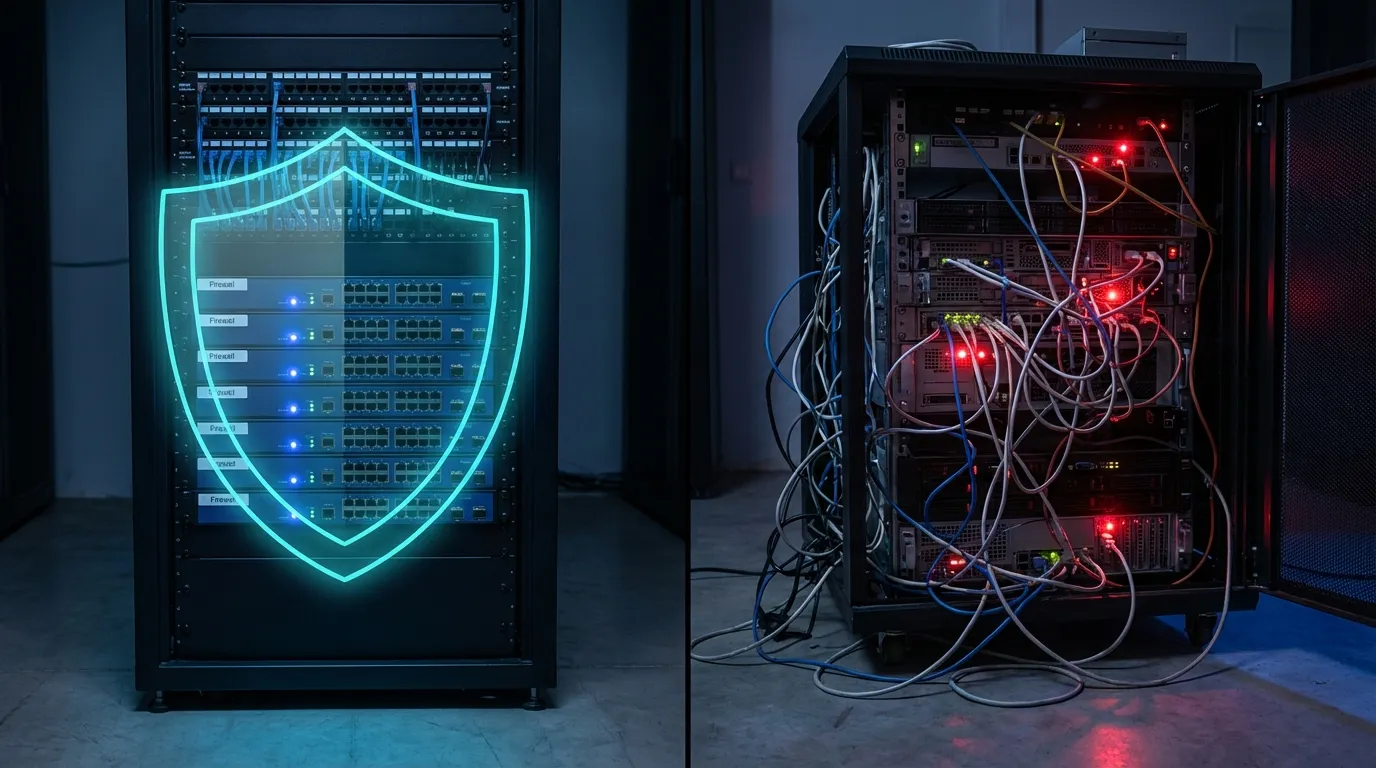
The question is not whether an SME needs a firewall. It is whether the company can realistically operate that firewall well over time.
That is the difference between a self-managed firewall and a managed firewall service. The hardware may look similar on paper. The operating model is not.
What self-managed really means
A self-managed firewall usually means:
- the company buys the appliance or virtual firewall
- an internal IT person or external consultant sets it up
- rules are reviewed occasionally
- alerts are not monitored continuously
- changes depend on staff availability
This can work in organizations with skilled internal teams and disciplined processes. It fails quickly when security becomes a side task.
What managed really means
A managed firewall service adds an operating layer around the technology:
- controlled rule changes
- update management
- visibility and reporting
- structured response to suspicious events
- documented administration and support processes
The value is not only technical protection. It is consistency.
The hidden cost of self-managed security
Self-managed looks cheaper at the start because the cost is visible only in hardware, licenses, and occasional consulting. The real cost appears later:
- time spent reviewing rules
- missed firmware or signature updates
- weak logging practices
- slow incident triage
- dependence on one person who "knows the setup"
For SMEs, that last point is often the biggest risk. If one consultant or one employee becomes the single point of knowledge, the firewall stops being an asset and starts becoming operational debt.
Where managed firewall services help most
Managed services are especially useful when the company:
- has no dedicated security team
- runs customer-facing or business-critical services
- needs clearer evidence for audits or compliance
- supports remote users, suppliers, or multiple sites
- cannot afford security mistakes caused by neglect
The point is not that internal teams are incapable. It is that perimeter security requires regular attention, and most SMEs do not have spare capacity for that.
When self-managed can still be reasonable
Self-managed may make sense when:
- the business has experienced internal network and security staff
- there is a documented change process
- logs are centralized and reviewed
- patching is tracked
- the company already runs broader internal security operations
If those conditions do not exist, self-managed often becomes “installed once, then forgotten”.
Compliance and auditability
NIS2 and similar frameworks shift the discussion from product ownership to control evidence. Auditors and customers care less about which appliance you bought and more about whether you can prove:
- who had access
- what was changed
- how incidents are detected
- how logs are retained
- how remote access is controlled
That makes managed operations more attractive, because evidence is easier to produce when processes are repeatable.
Conclusion
For most SMEs, the smarter choice is not the firewall with the longest feature list. It is the model that can be operated reliably every month.
That is why managed firewall services are often the more professional choice: not because the technology is magically different, but because the operational discipline is.