Business VPN with MFA: Secure Remote Access Guide for SMEs
A VPN without MFA leaves the door open. Learn how SMEs should approach business VPNs, WireGuard, OpenVPN, MFA, and the risks of exposed RDP.
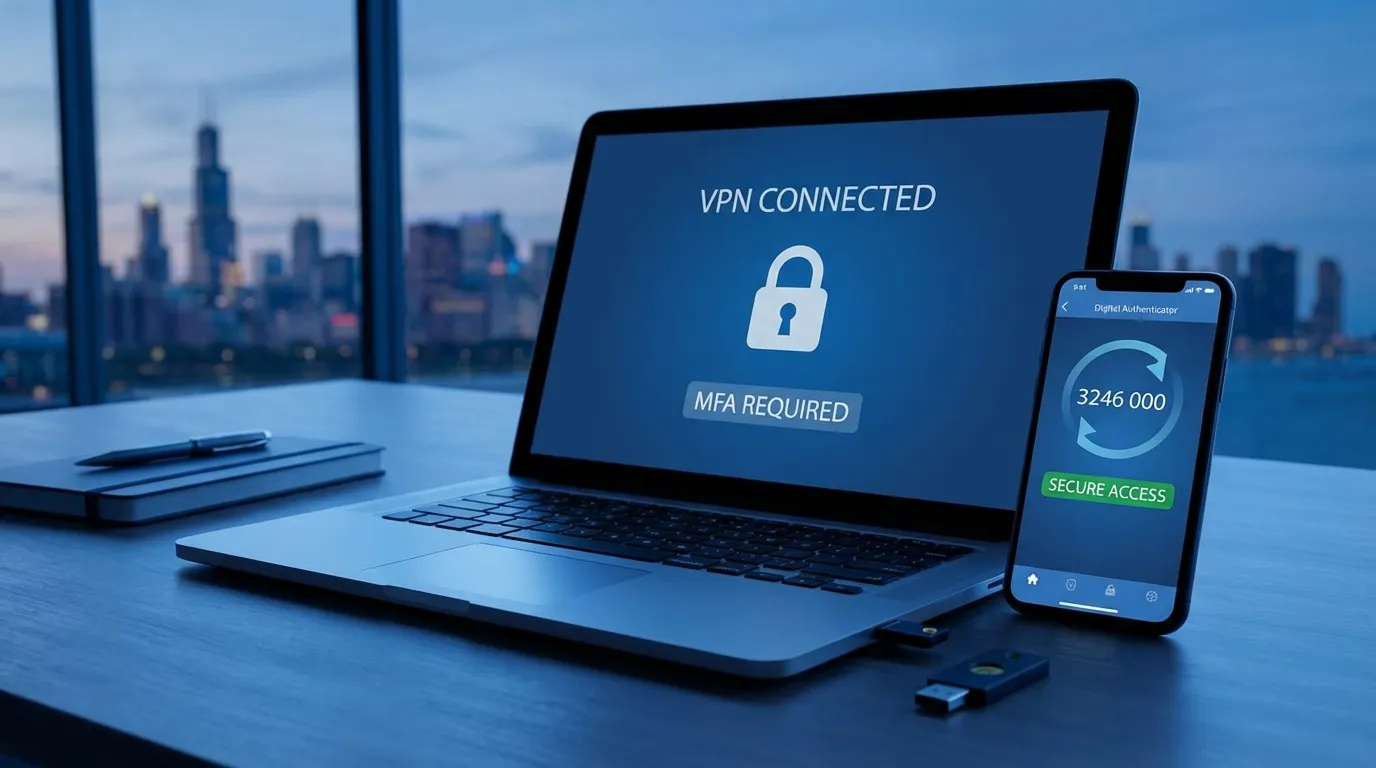
Remote access is one of the fastest ways to improve productivity and one of the fastest ways to break your security model when it is designed badly.
The most common SME mistake is simple: exposing RDP or another administrative service directly to the Internet and assuming strong passwords are enough.
They are not.
Why VPN plus MFA is the right baseline
A business VPN creates a controlled entry point to internal systems. MFA adds a second check so stolen credentials alone are not enough for access.
Together, they reduce the two risks SMEs face most often:
- credential theft
- exposed remote services
Why exposed RDP remains dangerous
RDP is heavily targeted because it is common, useful, and easy to scan. Once it is exposed publicly, attackers can test credentials, reuse breached passwords, or exploit weak operational controls around privileged access.
That is why the safer design is:
- no direct public RDP exposure
- VPN as the access layer
- MFA for every user
- centralized logging of sessions and changes
WireGuard vs OpenVPN in this context
Both can support secure business access. For most SMEs:
- WireGuard is often the cleaner default for new deployments
- OpenVPN may remain useful for compatibility or restrictive environments
The protocol matters less than the full access model around it.
MFA choices
The practical options are:
- authenticator apps
- hardware tokens for higher-risk users
- centralized identity enforcement where available
SMS should not be the preferred long-term answer for business-critical access.
Operational questions SMEs should ask
- How quickly can access be revoked?
- Are user identities individual or shared?
- Are privileged sessions traceable?
- Can logs be retained as evidence?
- Can remote access survive staff turnover cleanly?
Those questions matter more than vendor branding.
Conclusion
A VPN without MFA is incomplete. MFA without a controlled access path is also incomplete. SMEs need both, plus a model for logging, revocation, and support.
That is what turns remote access from a convenience feature into a defensible security control.